
Whistler’s Winter Wellness Awakening
Story by Caroline Egan
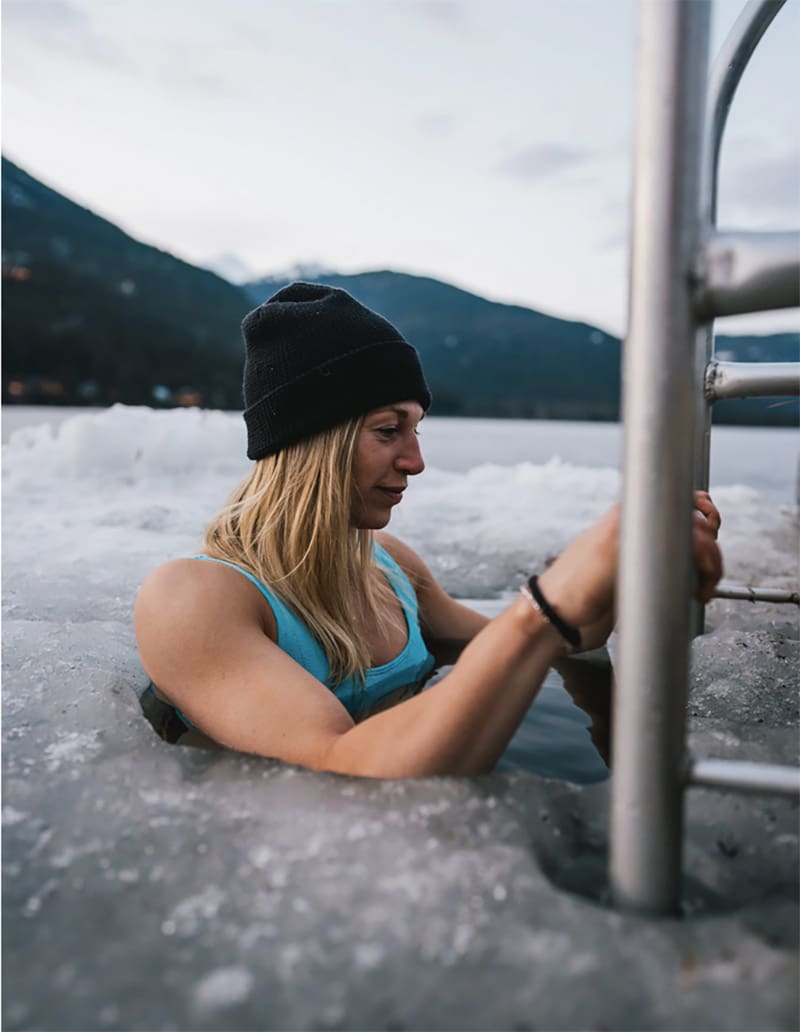
Image Courtesy We Dip Whistler
The alarm goes off at 6 a.m. Back at home, you might hit snooze. But here in Whistler, you’re wide awake, not because you have to be, but because you want to be. Outside your window, snow blankets the peaks in that particular shade of blue that only exists before sunrise in the mountains. Today isn’t about conquering the steepest run or logging the most vertical. Today is about something different: recovery, restoration, reset.
Whistler has always been synonymous with adrenaline. It’s the place where hucking cliffs and charging through waist-deep powder happen regularly. But lately, something has shifted in this mountain town. Between the ski runs and bike parks, a quieter revolution is taking root: wellness. What was once thought of as something you did after the real adventure is now becoming as central to the Whistler experience as fresh tracks on the mountain.
It’s a chilly morning at Nita Lake, and a small group gathers at the water’s edge. The temperature hovers around freezing, and steam rises from the surface where the water hasn’t yet solidified. Laura Douglas, owner and operator of We Dip Whistler, leads her community through slow movements that warm the body — generating heat from within before the plunge.
Douglas discovered cold-water immersion during the COVID lockdown in the U.K., diving into a lake everyone warned her was too dangerous. The wetsuit she bought stayed unused. “It was at that moment when I just felt so incredible and alive and just like, just joy, and like pouring from inside,” she recalls. “I was like, ‘Wow, this is incredible.’”
When she arrived in Whistler, she knew she’d found her place. “The incredible range of lakes and different spots, the rivers, the creeks, they are endless,” Douglas says. Whistler’s waterways stay cold, fed by glacial melt and mountain springs. Come winter, cold plunging into these breathtaking bodies of water becomes a ritual.
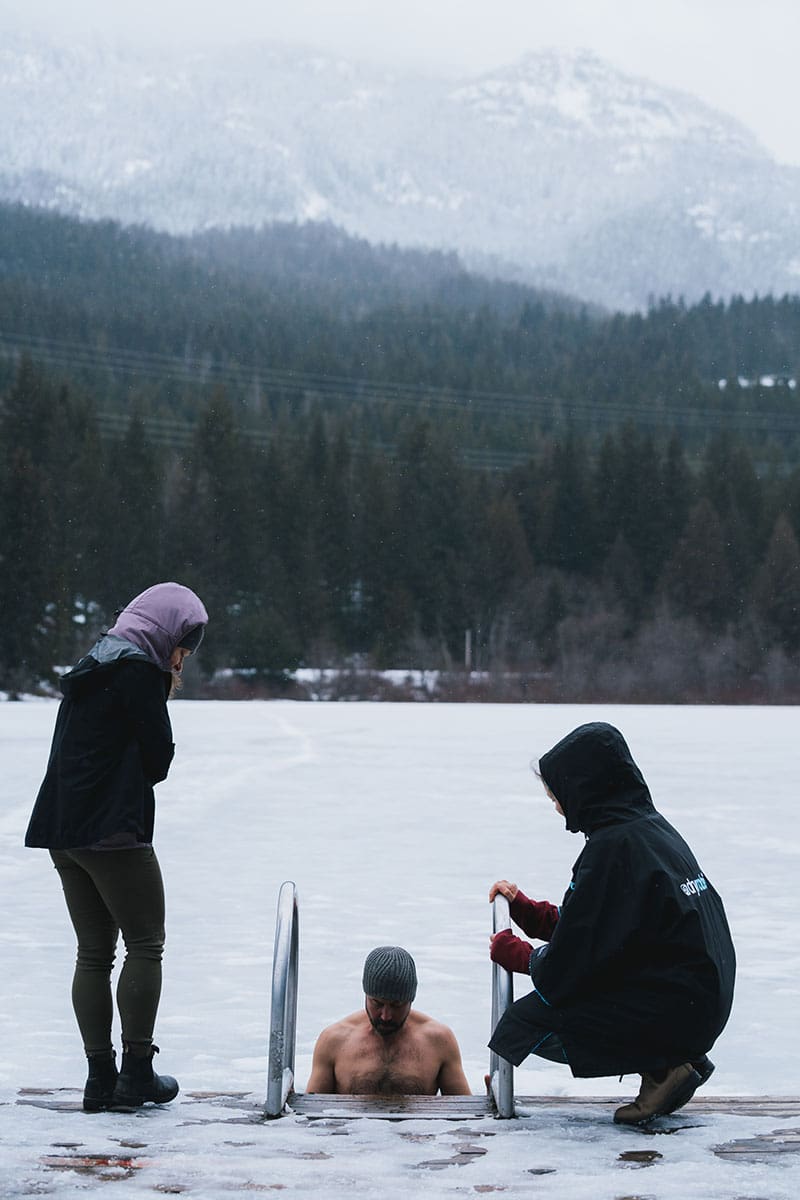
Image Courtesy We Dip Whistler
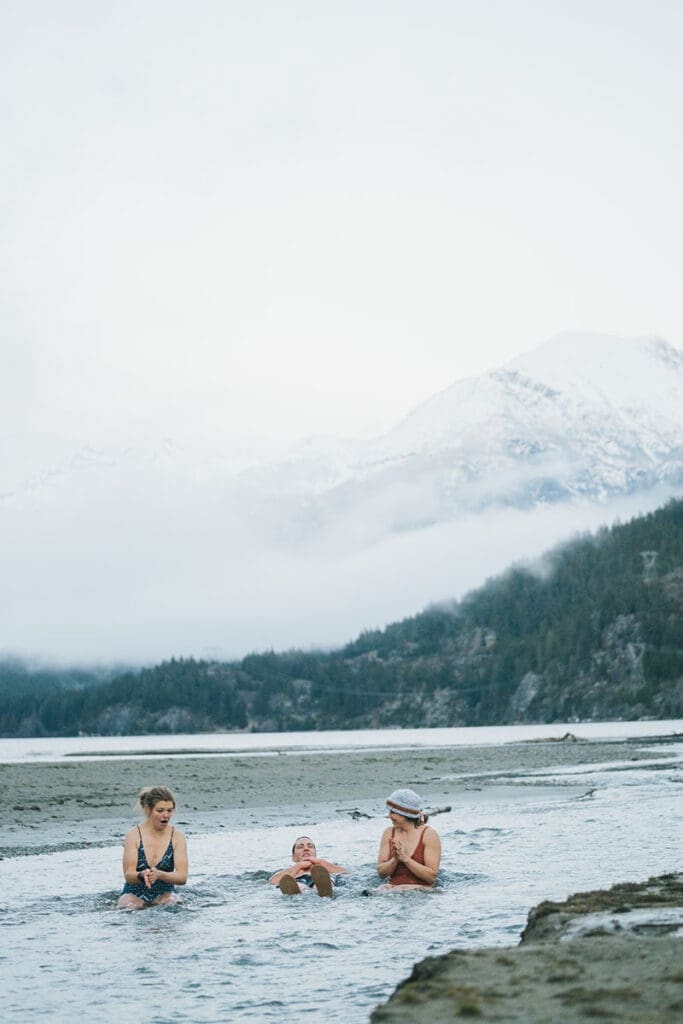
Image Courtesy We Dip Whistler
The appeal goes beyond the immediate rush. Douglas has watched clients experience profound shifts. She mentioned that one of her clients even quit his job after realizing, through the clarity of cold immersion, what truly mattered in his life. “When you go into the cold, all those things just disappear, and it’s just you, love, and light,” she explains.
For skiers and riders, the benefits build over time. Regular cold plungers find they don’t get as cold on the hill anymore. Their bodies adapt, building resilience. “Their body is able to climb. They just feel like they are able to be outside longer, be on a hill longer,” Douglas says.
wedipwhistler.com
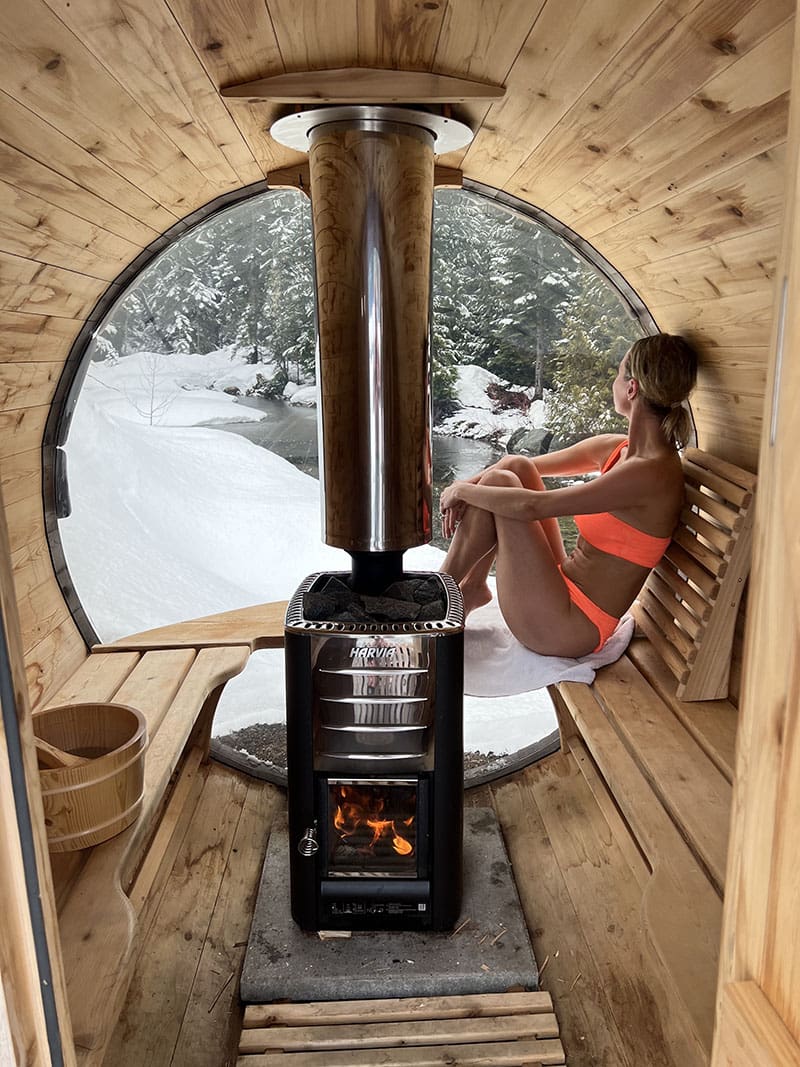
Images Courtesy CWA
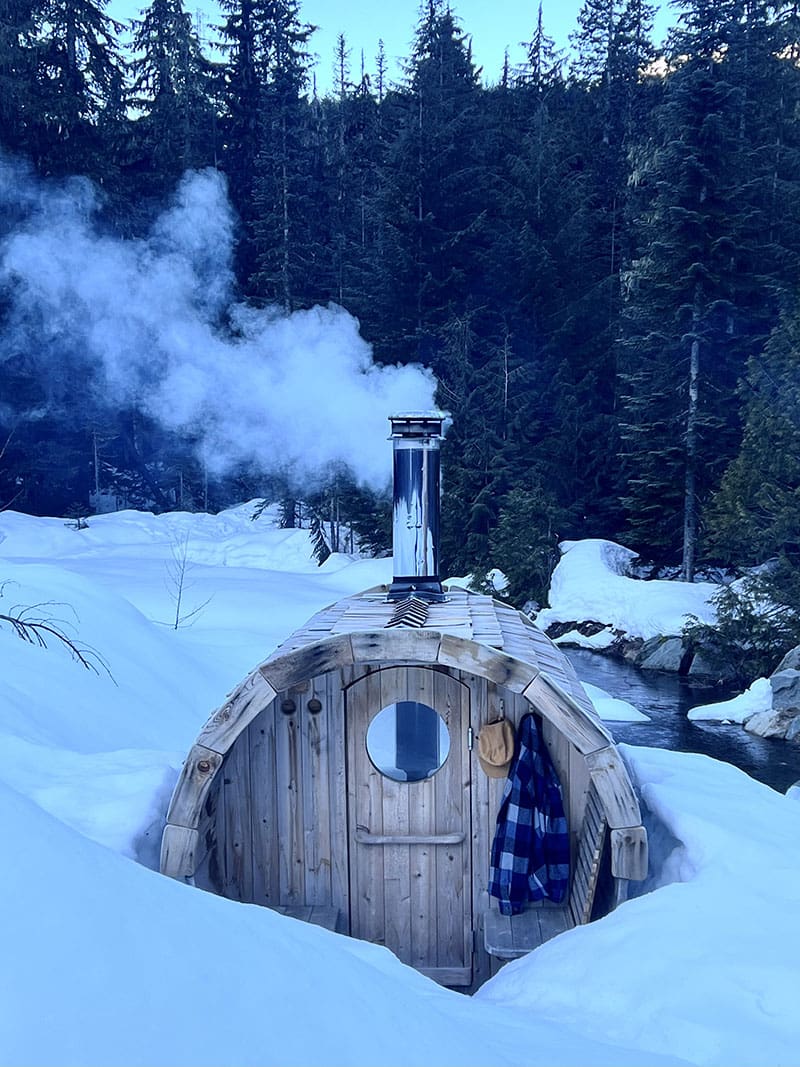
A Trek to Serenity Hidden in the Forest
While some seek the shock of icy water, others are discovering the ancient Nordic tradition of sauna culture — with a Whistler twist.
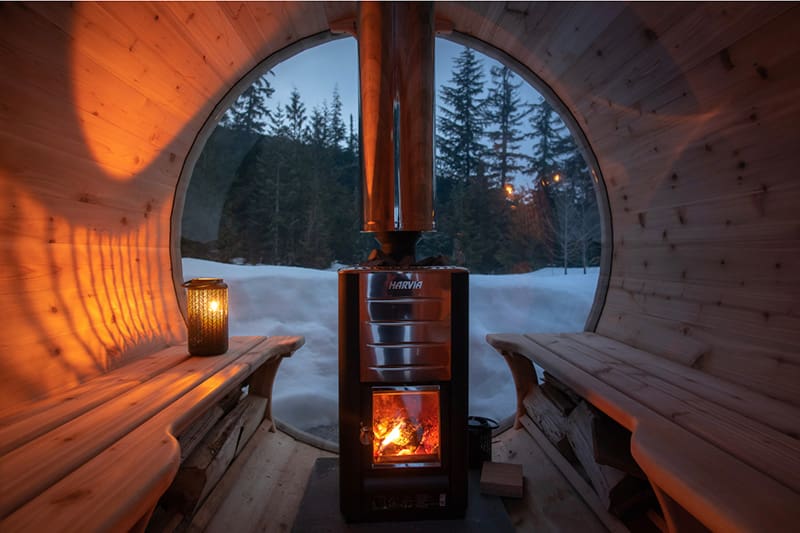
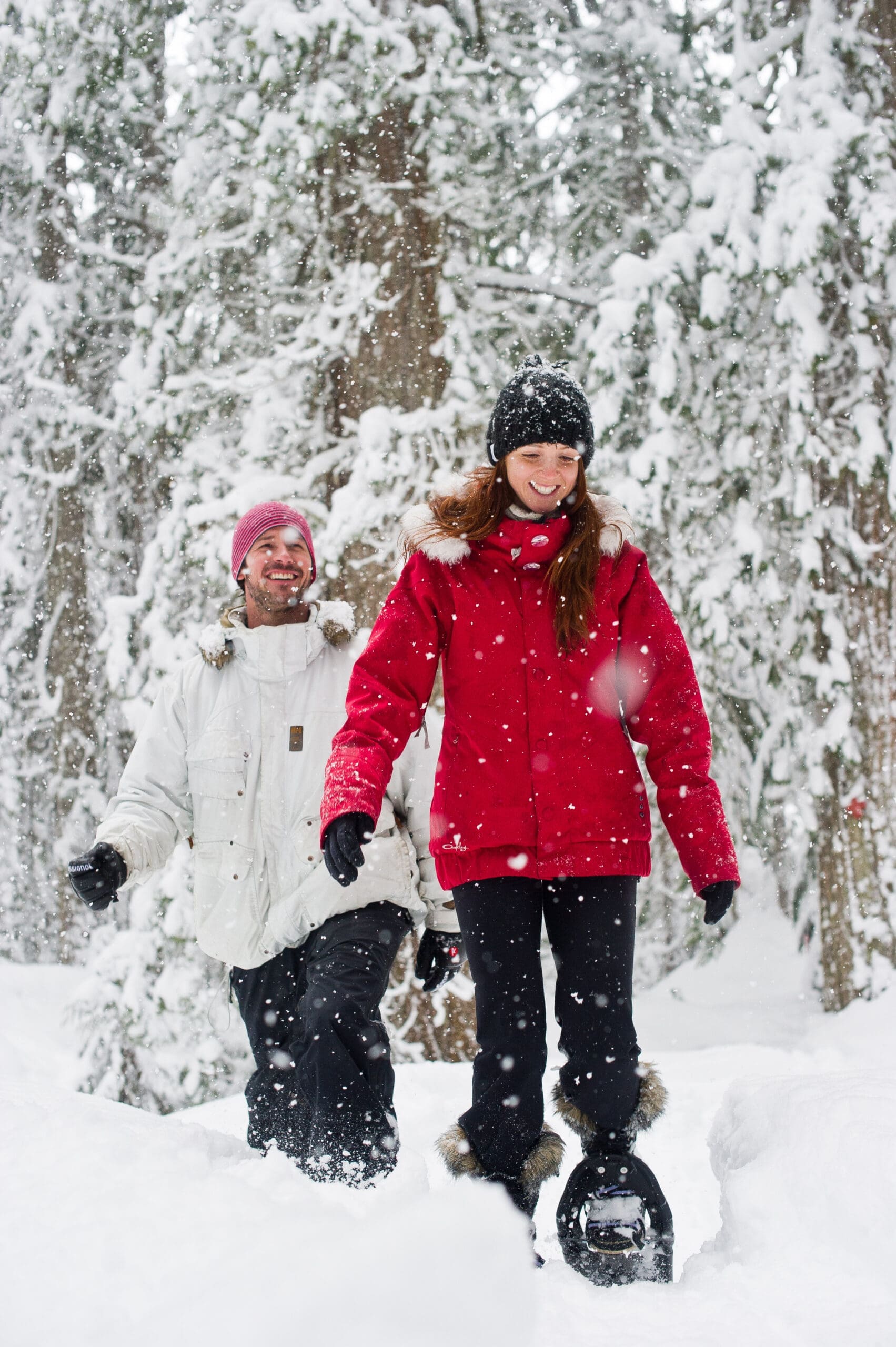
Canadian Wilderness Adventures (CWA) has tapped into this wellness shift with their Sauna Experience by Snowshoe tour. Guests strap on snowshoes and trek nearly 45 minutes through old-growth forest in the Callaghan Valley to reach wood-fired barrel saunas tucked away in the wilderness.
“Modern life is increasingly dominated by screens, constant notifications, and urban overstimulation,” says Kristal Taylor, CWA’s director of sales and marketing. “Experiences like guided forest treks or wilderness saunas offer a return to simplicity and presence — a chance to reconnect with the natural world, their senses, and themselves.”
The tour soft-launched late last winter, and the response has been enthusiastic heading into the first full season. Taylor sees it as part of a broader evolution, “a shift to offer a balance of thrilling adventures and wellness or recovery experiences.”
The magic lies in the tour's contrast — the bite of winter air against heated skin, the silence of snow-covered trees broken only by the crackle of fire. It’s wellness that feels natural, grounded in the landscape itself.
canadianwilderness.com
The Science of Slowing Down
Dorrie Cyr teaches yoga, offers massage treatments, and leads sound baths through her business, Glow Wellness Alchemy. Most days of the week, you’ll find her hosting classes at the Fairmont Chateau Whistler. The crystal sound bath sessions, in particular, have become unexpectedly popular since she introduced them in 2022.
“Ninety per cent of each class, it’s their first time,” Cyr says. She always asks for a show of hands at the beginning. By the end, participants report feeling profoundly relaxed — some describe magic-carpet rides through space, while others feel so grounded they can barely move.
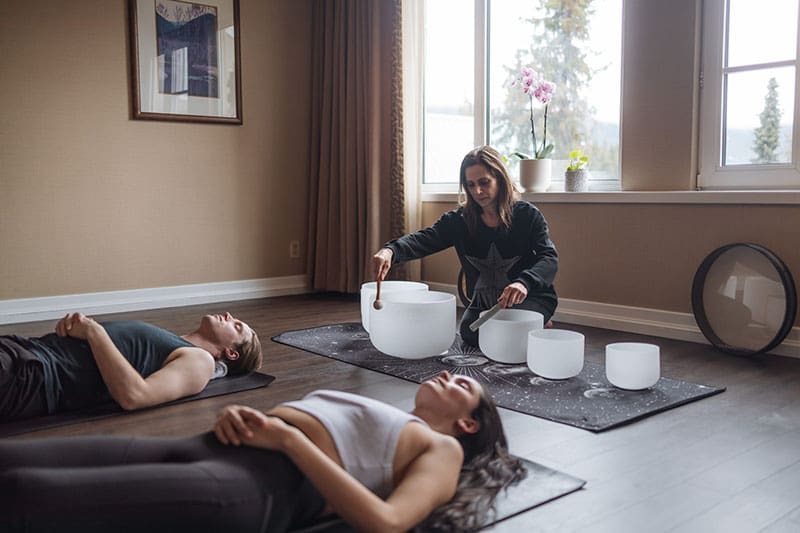
Image Courtesy Glow Wellness Alchemy
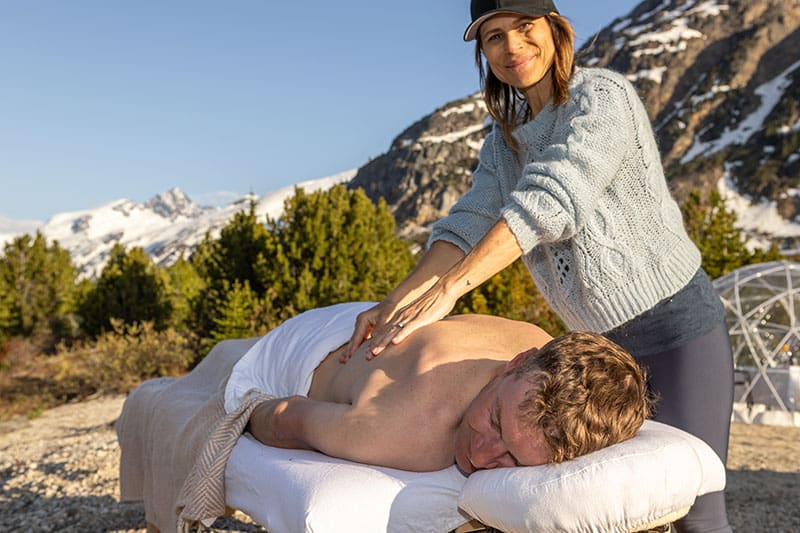
Photo Joern Rohde
In Cyr’s classes, the practice uses vibrational instruments such as crystal singing bowls, a sonic energy wave drum, chimes, and gongs. Research shows that such sessions can significantly reduce tension and improve emotional well-being. For travellers dealing with jet lag or skiers managing the constant stimulation of the mountain, it’s a tool for genuine restoration. Cyr notes that when she follows up with guests the next day, eight out of 10 report better sleep.
Cyr, who has been working in mountain-town spas for nearly three decades, has noticed a clear shift toward wellness since COVID. “Health and wellness are more of a forefront, and it’s not considered as much to be like a selfish act,” she says. “It's more like a necessity."
In winter, her yoga classes fill up. The early darkness, the cold, the tendency to spend more time inside: It all drives people toward practices that help them feel more grounded and present.
Fairmont Chateau Whistler brings out barrel saunas specifically for winter guests. Cyr recommends guests follow their massage with time in the sauna, then take advantage of the cooler lap pool for contrast therapy.
glow-coco.ca/glow-wellness-alchemy
A Different Kind of Powder Day
What’s driving this wellness boom? Part of it is demographic. Visitors who grew up skiing are aging, still chasing powder, but also seeking recovery. Part of it is cultural. The always-on, constantly connected nature of modern life makes the mountain town reset more valuable than ever.
However, something specific about winter amplifies the wellness experience. The contrast between hot and cold isn’t just physically therapeutic; it’s metaphorically resonant: the forced slowdown of shorter days; the way sound carries differently in snow-covered forests.
It’s a particular time of year that calls for time well spent on restoration.
“I think in Whistler, it’s a great way for people to refresh after a day on the hill,” Douglas says. “Whether they [are] riding or if they’ve had a busy day at work, it’s a nice way to wash away the day.”
For Cyr, who moves fluidly between several healing modalities, the work itself is a source of restoration. “I feel fortunate to have the tools that not only support others, but also continually bring healing and balance into my own life.”
As Whistler continues to evolve, wellness isn’t replacing adventure. It’s complementing it. The steep and deep will always be here. But now, so is the slow and intentional — the cold waters and the roaring fires; the calmer frequencies and the introspection.
It’s a different way to experience Whistler, and it might be exactly what stressed-out urbanites — and local ski bums — need most.
Images Courtesy CWA