Local Vibe
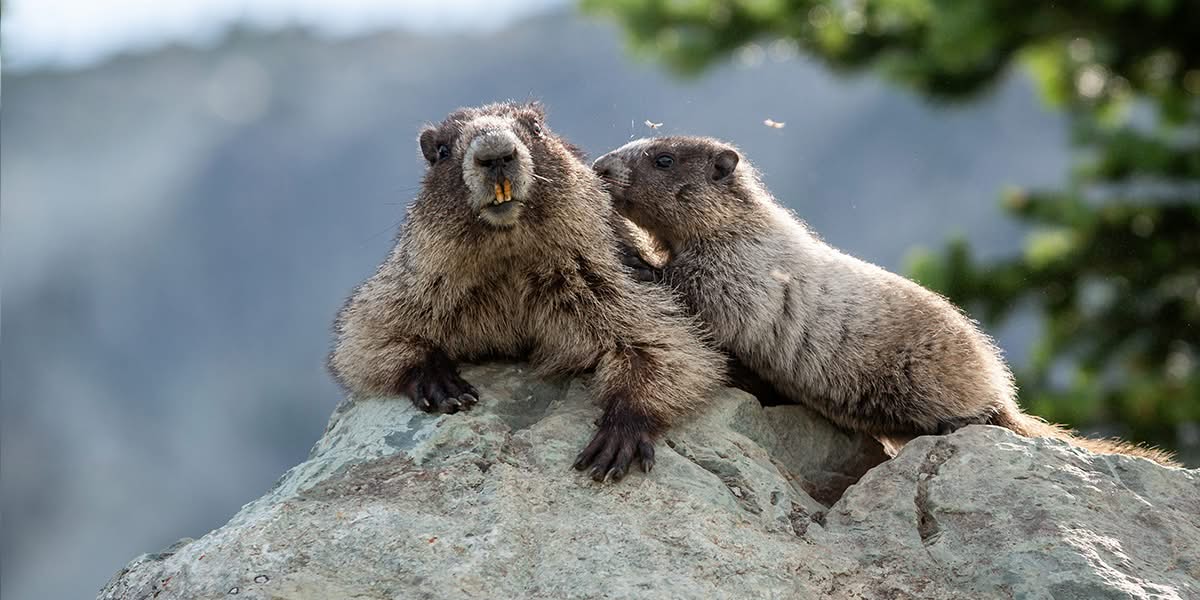
Local Animal: Hoary Marmot
Story by David Burke
Images by Joern Rohde
While four species of marmots inhabit the territory of British Columbia — the hoary, the yellow-bellied, the Vancouver Island and the woodchuck — only one of them lends its distinctive vocalization to a world-famous four-season resort. The hoary or “whistling” marmot (marmota caligata), for which Whistler is named, is native to the alpine and sub-alpine portions of the place that was called Cwítima (from the root word for “whistle”) by the Lil’wat and Skwikw (marmot) by the Squamish peoples long before Europeans arrived. The two peoples, in fact, historically hunted the marmots for their fatty meat. The Lil’wat even honour the marmot in some of their songs and dances. Learn more about the two nations’ traditional practices at the Squamish Lil’wat Cultural Centre. slcc.ca
The Whistler Museum’s records indicate that the name Whistler or Whistle was used informally as early as the 1920s and that the name was officially changed from London Mountain in the 1960s. whistlermuseum.org
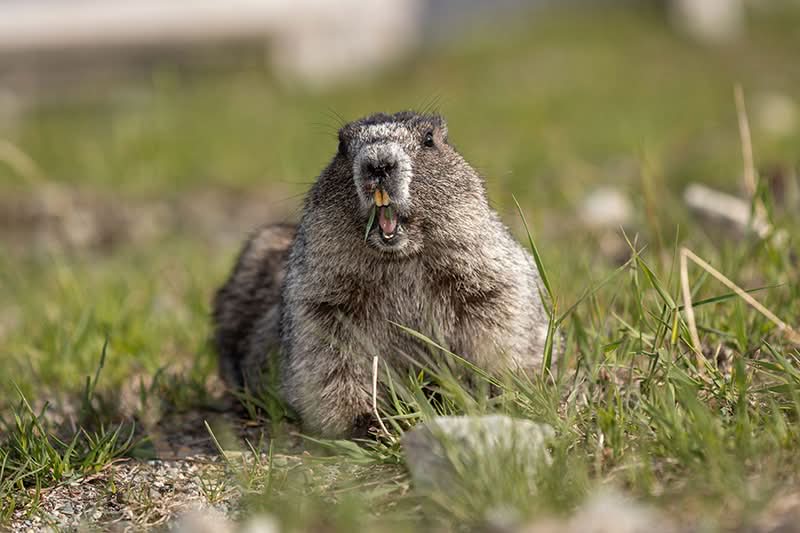
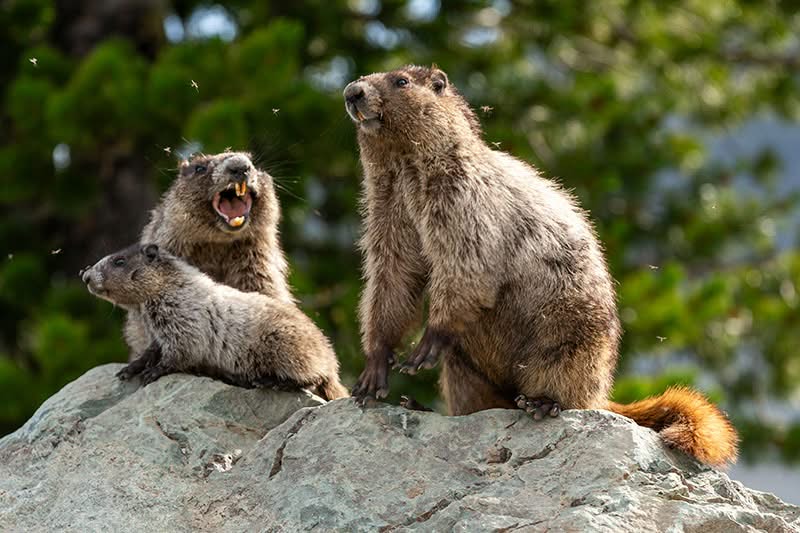
The largest breed of ground squirrel, adult hoary marmots are 45 to 57 centimetres (18 to 22 inches) long and can weigh up to 9 kilograms (20 pounds), according to the Sierra Club of British Columbia (sierraclub.bc.ca). Hoary marmots live in colonies of 10 to 20, and their high-pitched call signals danger to other members of the colony. They bore holes deep into the ground for winter hibernation and emerge from April to September to sun themselves and feed on the abundant grasses, roots, berries, and wildflowers found in the mountains.
It’s not known just how many “whistlers” inhabit the area, but as with the other three species of marmots, the hoary marmot is protected from trapping and hunting under the B.C. Wildlife Act. If you’re hiking in the alpine or sub-alpine this summer, keep your eyes and ears peeled. Peeeeep!
Park it Outdoors
Story by David Burke
Images by Joern Rohde
Getting outdoors — for a picnic, a friendly game of volleyball, a swim or paddle in a lake or just an afternoon of sunbathing — is high on the priority list for Whistler locals and visitors alike. And even though one of its major parks is closed for renovations this summer, the community delivers in spades.
Meadow Park, which for decades has been a favourite Whistler summer hangout, is closed for renovations this summer. Thanks to funding from the B.C. government’s Resort Municipalities Initiative, the park that abuts the River of Golden Dreams and Meadow Park Sports Centre (which is open) is undergoing a major upgrade, including replacement of the existing spray park and playground, the addition of a new dog off-leash area and enhancements to the public picnic areas and pedestrian/cyclist pathways.
But have no fear. The options for Summer 2026 are plentiful, including Rainbow, Lost Lake, Alpha Lake, Wayside and Lakeside parks, all of which are connected by the 50-kilometre (30-mile) Valley Trail. Completed in 2024, the multi-phased “rejuvenation” of the popular Rainbow Park — with its lake access and stunning views of Whistler and Blackcomb mountains — resulted in a larger beach, the addition of a beach promenade, relocation and upgrades to the volleyball and seating areas and improved drainage.
whistler.ca/parks
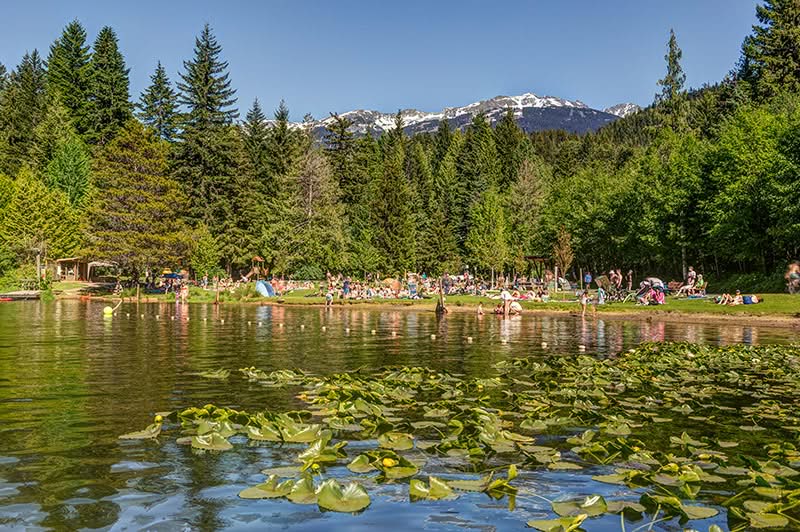
LAKESIDE PARK
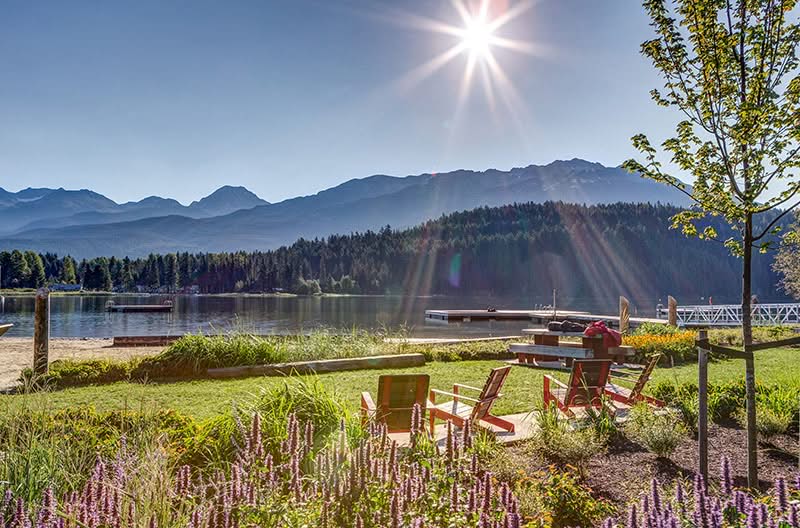
RAINBOW PARK
25 Years of the Whistler Writers Festival
Story by Dee Raffo
Images by Joern Rohde
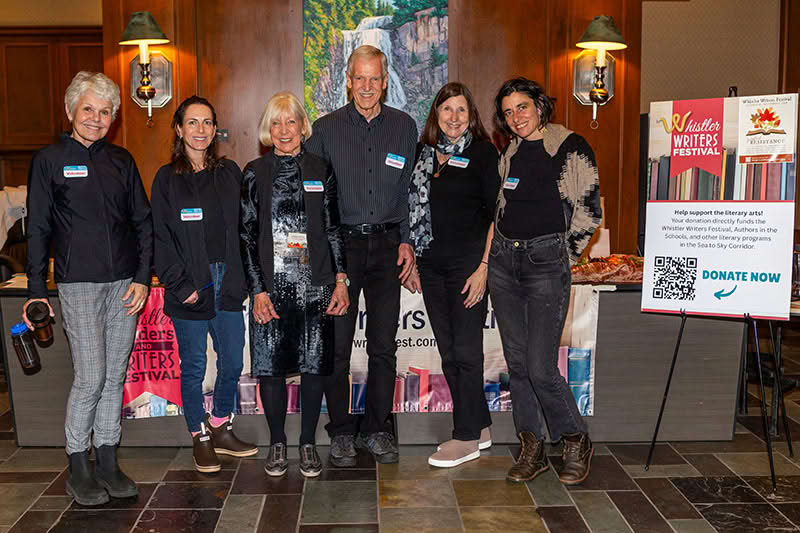
Started in 2001, the Whistler Writing Society initially brought together avid Whistler readers and writers in founder Stella Harvey’s living room. At that gathering, participants balanced plates piled with potluck food, squished onto sofas and perched on armrests to hear author Andreas Schroeder read from his work and discuss the difference between an anecdote and a story. Little did they know this get-together would grow into a marquee literary festival and cultural anchor for Whistler.
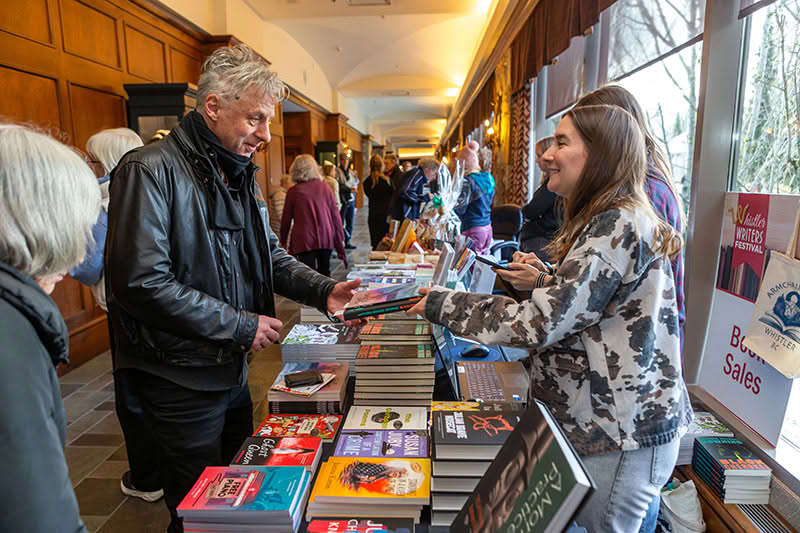
In 2026, from Nov. 5 to 8, the Whistler Writers Festival celebrates 25 years of bringing readers, writers and storytellers together. Each year, the festival now welcomes around 1,800 attendees across more than 20 events, connecting audiences with 70 to 80 diverse authors. Over the years, award-winning writers such as Lawrence Hill, Miriam Toews and Eden Robinson have attended the festival.
Spanning fiction, non-fiction, children’s and young adult literature, the festival also nurtures emerging writers through masterclasses, industry pitch sessions and residency programs. Held each fall, it remains a welcoming space for anyone who loves a good story. whistlerwritersfest.com
Train Wreck Turns 70
Story by Bronwyn Preece
Images by Joern Rohde
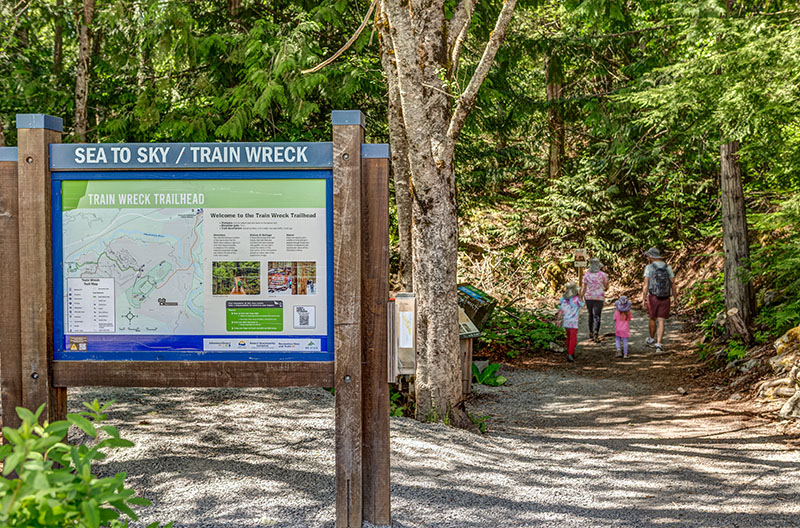
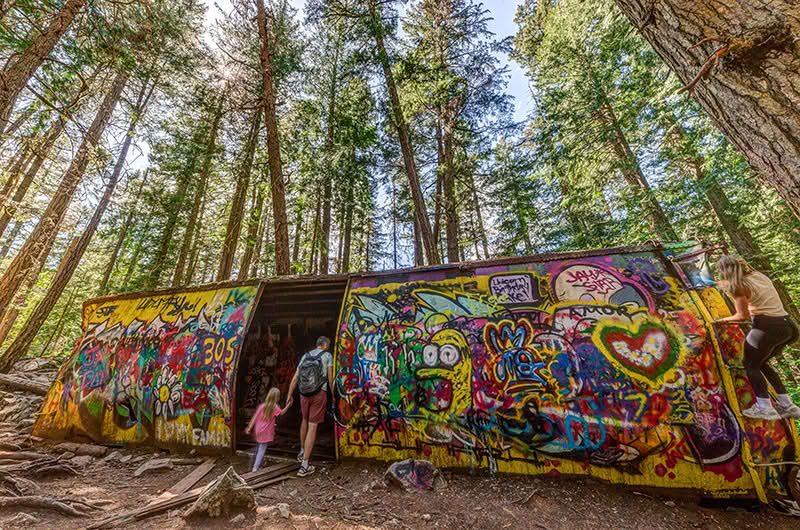
The Train Wreck is one of Whistler’s most popular attractions. Accessed by a walking trail from Cheakamus Crossing, 6 kilometres (3.73 miles) south of the Village, the 1 km (.6 mi.) one-way path winds through towering trees, mossy bluffs, and across a suspension bridge over the Cheakamus River. That leads to a forested glen scattered with graffiti-adorned, rustic and rusting derailed railway cars. The juxtaposition of the crash site (or almost!) with an open-air gallery of spray-painted colour invites visitors to return to an historic moment, and interpretive panels at the site help shed light on what happened in the summer of 1956.
Many keen visitors may wonder how the cars came to be nestled in the woods, with no evidence of scarred trees or scattered debris. Well, the Train Wreck was not the actual site of the derailment. The accident occurred on a different section of rail, narrowly slotted and roughed out through rock. Three boxcars, loaded with lumber, were travelling well above the speed limit. They jumped the track, effectively blocking the line, and the Pacific Great Eastern Railway was unable to move the stuck boxcars. The local Valleau Logging Company was enlisted, with its heavy equipment, to free them. Workers pulled the cars further up the track and deposited them where they lie today for all to see! whistlermuseum.org
Go for a Reusable Coffee Cup
Story by Dee Raffo
Image Courtesy Reuse Whistler
We all know we should carry a reusable travel mug, but sometimes the coffee craving hits when we’re unprepared. That’s where Reuse Whistler comes in.
Reuse Whistler is a circular economy initiative that replaces single-use coffee cups with reusable ones. At participating cafés, you can choose a reusable cup for your drink and return it to any participating location or their designated smart bins.
“It’s designed to eliminate waste before it's even created,” says Claire Ruddy, a longtime Whistler local and former executive director of Aware Whistler, the community’s environmental organization. “Past audits show that to-go food and drink containers are a major waste stream for Whistler. Shifting to [reusables] can save energy and water, reduce greenhouse gas emissions and avoid microplastic-releasing single-use containers.”
Getting involved is simple: Order your drink in a free reusable cup, tap your credit card, and return the cup within five days. A charge is applied only if the cup isn’t returned and refunded as soon as it is. Be part of the shift, one cup at a time. reusewhistler.ca